
Spring Clean Your DevOps Process: Fresh Ideas for Bitbucket Teams
As spring arrives in the Northern Hemisphere, many teams start thinking about cleaning up old systems, simplifying workflows, and making room for better ways of working.
Development teams should do the same.
Over time, even strong DevOps practices can collect “process clutter”:
- approval steps nobody questions anymore
- manual handoffs that slow down progress
- inconsistent pull request rules across repositories
- limited visibility across teams
- compliance checks that happen too late (or only when someone remembers)
The result? More friction, slower releases, and more effort spent managing process than shipping value.
The good news is that a DevOps reset doesn’t need to mean a complete overhaul. Often, a few focused changes can make a big difference.
Here are some fresh ideas for Bitbucket teams looking to clean up old habits and improve how they work.
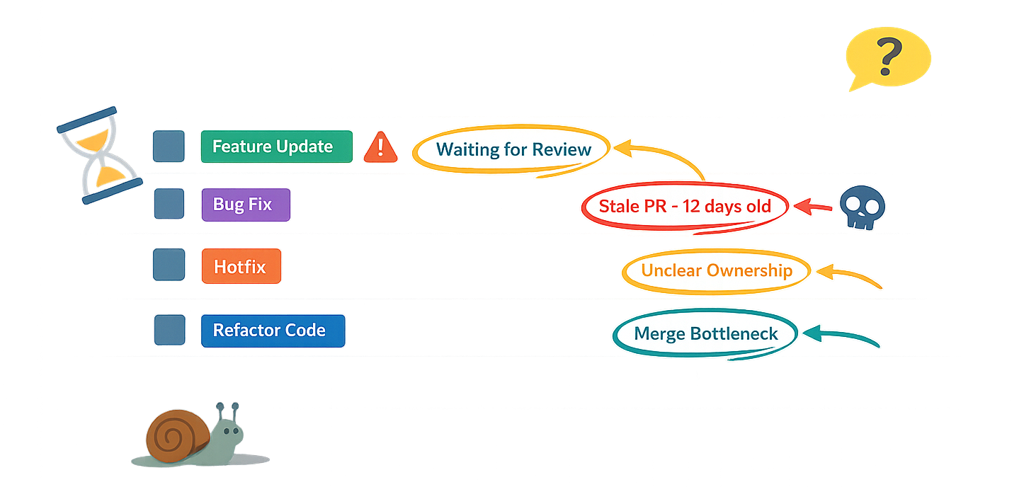
What “process clutter” looks like in Bitbucket teams
Most teams don’t create inefficient processes on purpose. They evolve them over time, usually for good reasons:
- a rule was added after an incident
- an extra approval was introduced for a sensitive repo
- a manual checklist became the “safe” fallback
- a team adopted different conventions than everyone else
Individually, these changes make sense. But together, they can create a DevOps environment that feels heavy and inconsistent.
Some common signs:
- PR cycle times are longer than they should be
- teams can’t easily see what’s blocked and why
- release coordination depends on a few people
- audit/compliance evidence is hard to collect
- engineers work around process instead of trusting it
A spring clean is about removing that friction, without losing control.
1) Audit your pull request flow before adding more rules
Before introducing new tooling or governance, start with a simple question:
Where are PRs actually getting stuck?
Look for:
- repeated review bottlenecks
- inconsistent approval expectations
- PRs waiting on the same people
- merge delays caused by unclear ownership
- “invisible” blockers across multiple repos
This helps you avoid a common mistake: adding more process to fix a visibility problem.
Fresh idea:
Run a short “PR flow review” with engineering leads and identify:
- what should be standardized
- what should be automated
- what should be removed entirely
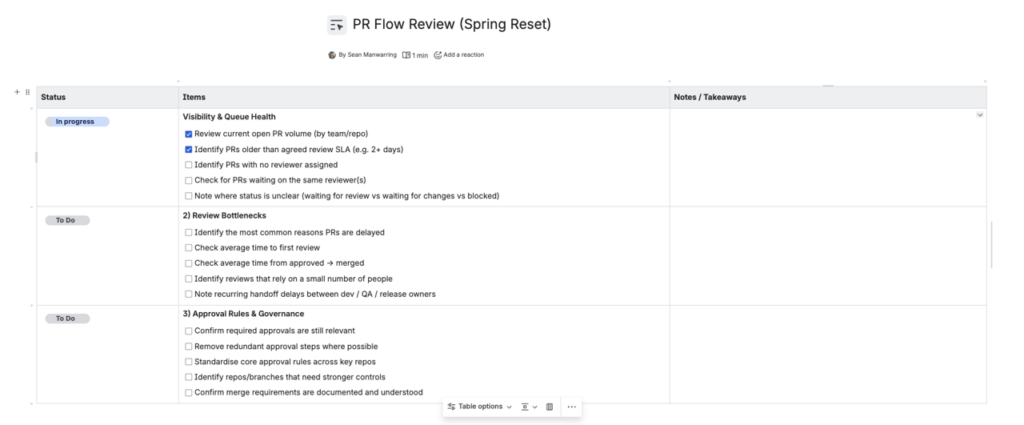
If you want to use this checklist for yourself, you can download it here! We recommend copying it over to Confluence and be sure to involve the right people from your team,
2) Standardize what matters, not everything
One of the biggest sources of DevOps friction is inconsistency.
If every repository has different expectations for approvals, reviewers, or merge readiness, teams waste time relearning the process each time they move across projects.
That doesn’t mean every repo should be identical. But your core controls should be consistent.
Examples of high-value standardization:
- required reviewers for sensitive code areas
- consistent approval policies for key branches
- merge guardrails for critical projects
- defined handoff points for release-related PRs
Fresh idea:
Create a “minimum viable governance” model:
- a baseline for all repos
- stronger controls only where risk justifies it
This keeps teams moving while still supporting compliance and quality goals.
3) Shift-left compliance checks earlier in the workflow
As AI-assisted coding becomes more common, compliance and governance are becoming more important, not less.
The challenge is making compliance part of the development flow instead of a last-minute release headache.
If checks only happen at release time, teams end up with:
- rushed exceptions
- missing evidence
- manual reconciliation
- delayed deployments
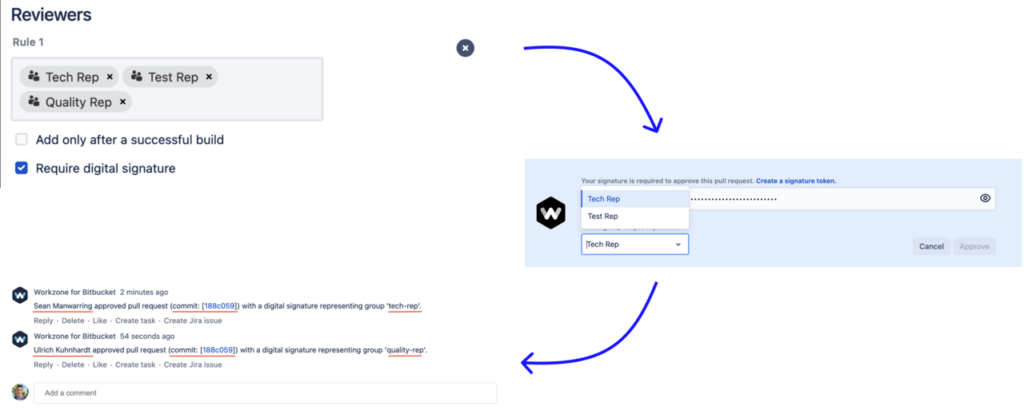
Fresh idea:
Treat compliance as a continuous workflow discipline inside the PR process:
- enforce the right checks at the right stage
- capture evidence as work happens
- reduce manual follow-up later
This is where teams often get the biggest improvement: better governance and less rework.
4) Improve cross-repo visibility for merge and release coordination
As teams scale, it becomes harder to understand the state of work across repositories, especially when release readiness depends on multiple PRs landing in the right order.
Without visibility, teams rely on:
- Slack messages
- spreadsheets
- status meetings
- “Can someone check this PR?” pings
That creates coordination overhead and slows delivery.
Fresh idea:
Make PR status and merge sequencing visible across teams so leads can quickly spot:
- blocked work
- dependencies
- merge readiness risks
- bottlenecks before release windows
This is especially useful for platform teams, shared services, and enterprise environments where multiple teams contribute to the same release outcome.
5) Replace tribal knowledge with repeatable workflows
If your most critical DevOps processes only work because a few senior people know the “real” steps, that’s a risk.
Spring cleaning is a good time to turn:
- undocumented conventions
- informal approval paths
- manual release rituals
into repeatable workflows that the broader team can follow.
Fresh idea:
Document the workflow and support it with tooling, so the process is:
- clear
- visible
- easier to enforce
- less dependent on individual memory
This improves onboarding, resilience, and consistency, especially as teams grow.
6) Make one meaningful improvement this quarter (not ten)
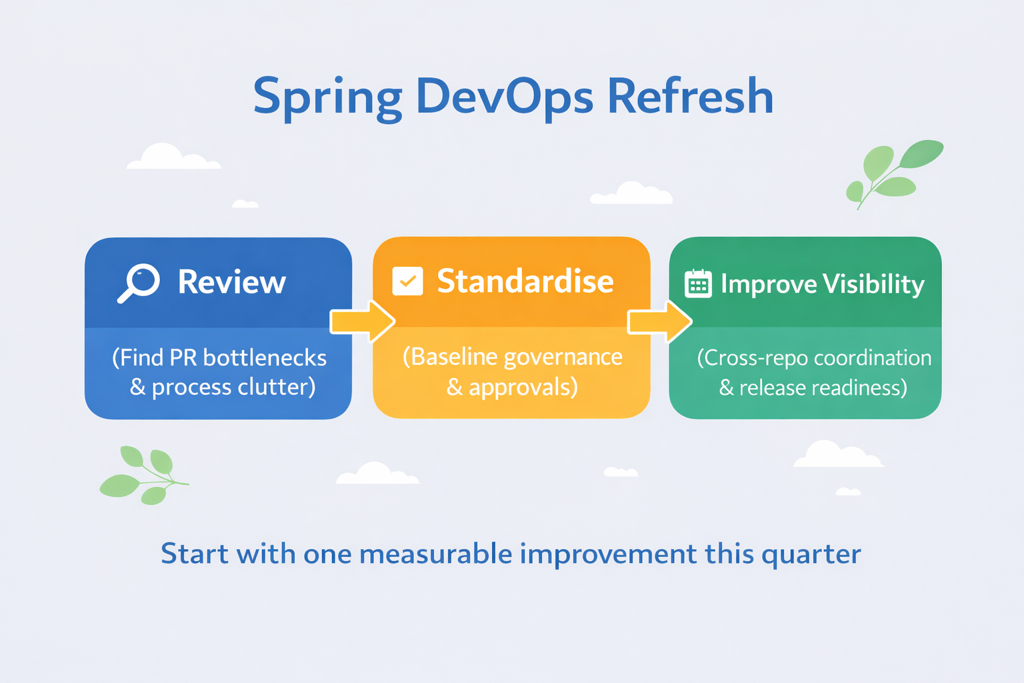
A full DevOps transformation can feel overwhelming. Most teams get better results by focusing on one or two high-impact changes first.
For example:
- reducing PR bottlenecks in critical repos
- improving merge visibility across teams
- introducing stronger compliance guardrails for sensitive code paths
- improving release readiness coordination
Fresh idea:
Pick one measurable goal for your “spring refresh,” such as:
- faster PR turnaround
- fewer release delays
- less manual compliance effort
- better cross-team visibility
Then build from there.
Where Workzone and Organizr can help Bitbucket teams
If your spring clean reveals that the biggest issues are around PR governance, compliance, and visibility, this is where purpose-built Bitbucket apps can make a difference.
Workzone (for PR automation and compliance enforcement)
Workzone helps teams strengthen pull request workflows by supporting more structured, enforceable processes, particularly useful when you need stronger governance without relying on manual policing.
This can be valuable for teams looking to:
- reduce manual review/admin overhead
- enforce approval and workflow expectations more consistently
- support audit and compliance efforts in day-to-day development workflows
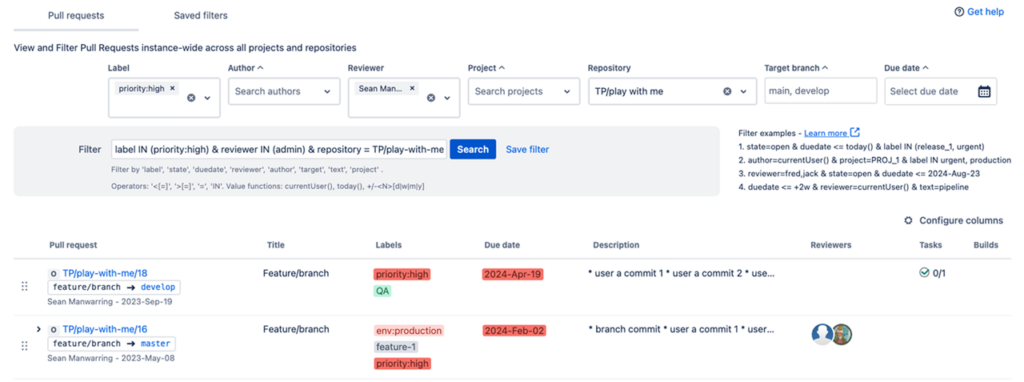
Organizr (for global PR visibility and merge orchestration)
Organizr helps teams improve visibility across pull requests and coordinate merge activity more effectively, especially in environments with multiple repos, dependencies, or shared release timelines.
This can be valuable for teams that need:
- better cross-repo visibility
- clearer understanding of what’s blocked
- improved merge coordination for release readiness
Turning a spring clean into a bigger DevOps improvement (without forcing change)
For some teams, a few process updates are enough.
For others, a spring clean uncovers a broader opportunity:
- PR flow is inconsistent
- compliance is too manual
- release coordination is fragile
- teams lack shared visibility
That’s where a service bundle approach can make sense.
Instead of solving one problem at a time, you can address the bigger workflow outcome, for example:
- PR Flow Optimisation
- Release Readiness & Traceability
- Compliance / Governance-focused DevOps improvements
This approach helps teams improve delivery speed, governance, and operational clarity together, rather than treating them as separate projects.
Final thought: Don’t just clean up, make space for better ways of working
Spring cleaning isn’t just about removing what’s old. It’s about making room for what works better.
For Bitbucket teams, that could mean:
- simpler PR workflows
- stronger (but lighter) governance
- better visibility across teams
- less manual coordination
- more confidence heading into releases
If your team is reviewing old processes this season, it’s a great time to refresh your DevOps workflow, and build a cleaner foundation for the next phase of growth.
Thinking bigger than a quick cleanup?
A spring review is the perfect time to assess a broader DevOps service bundle focused on PR flow optimisation, compliance, and release readiness in Bitbucket.
Interested to learn more about Workzone and Organizr mentioned above?